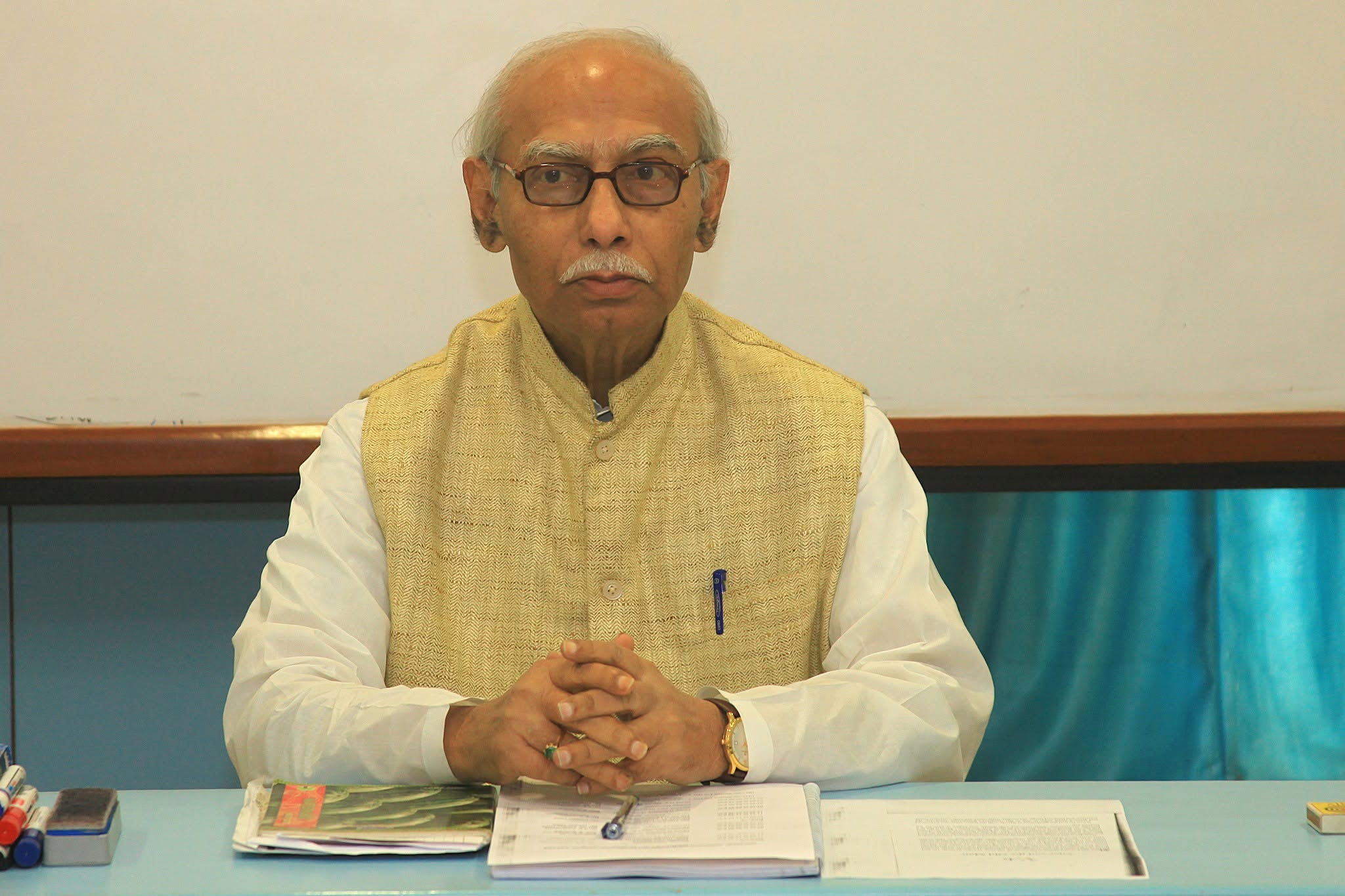
Professor Shitangshu Kumar Chakraborty began his academic life as a distinguished teacher of Finance and Control at IIM Calcutta — India’s first and most prestigious management institution.
He was a rigorous scholar in the Western tradition, fluent in the language of accounting, control systems and organisational behaviour. But in the mid-1980s, something shifted.
Surveying management education as it existed, he found it comprehensive in everything except the one thing that matters most: the human being at its centre. Freud, Maslow, McGregor and Mintzberg had mapped the psycho-social terrain of motivation and behaviour. Yet none had asked the deeper question — what is the self that leads? What is the source from which ethical, sustained, purposeful action truly flows?
Drawing from the Upanishads, the Bhagavad Gita, the lives of saints and the biographies of great Indian leaders, Professor Chakraborty began to construct an alternative framework. He called it the Rajarshi Leadership Model — a philosophy of leadership as the discovery of the divine within, expressed through responsible, ethical action in the world.
He studied eminent leaders — Acharya Prafulla Chandra Roy, J.R.D. Tata, Adi Godrej, Dr. Verghese Kurien — through the lens of his model, demonstrating how inner discipline and ethical rootedness are not obstacles to worldly success, but its most durable foundations.